
https://www.cantonfair.net/tag/23664-supplychain
When news broke about the 2026 conflict in Iran, most people rushed to the gas station. We’ve been taught that "Middle East trouble = expensive oil."
But in today’s world, the supply chain—the invisible web that moves parts and products across the globe—is much more complicated. This war isn't just a "fuel crisis"; it is a supply chain heart attack. It is changing how things are made, how they are insured, and why your next online order might be months late.
Here is the "anti-common sense" look at how the global supply chain is breaking and rebuilding.
1. The "Paper" Blockade: Why Insurance is the Real Boss
The Common Idea: If the ocean is open, ships will sail. The Supply Chain Reality: In 2026, insurance companies have more power than generals. Even if the Strait of Hormuz is physically open, insurance companies have raised "War Risk" fees by 500% or more. For many shipping companies, it is now too expensive to insure a cargo ship. When the "Financial Supply Chain" breaks, the physical ships stop moving. This creates a "phantom blockade" where the path is clear, but no one can afford to take it.
2. The "Calorie" Chain: From Natural Gas to Your Dinner Plate
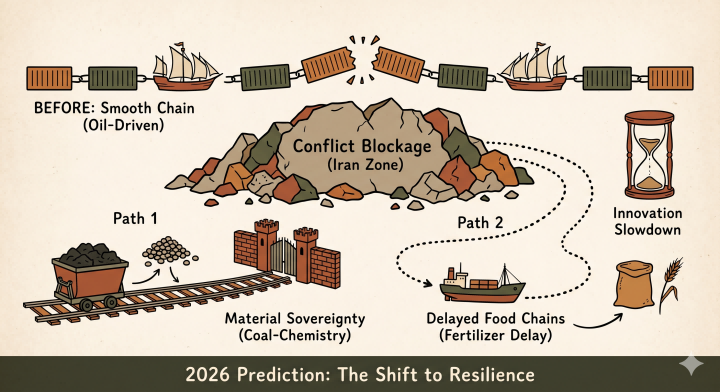
The Common Idea: We only need Middle Eastern energy to drive our cars. The Supply Chain Reality: The world's food supply chain runs on natural gas. The Middle East is a massive producer of the fertilizers (like urea and phosphates) that grow the world's crops. Because the conflict has stopped these shipments, the "Agricultural Supply Chain" is broken. We won’t feel this today, but in six months, there will be a global shortage of food. This is the "delayed hit" of a supply chain crisis: a energy problem today becomes a hunger problem tomorrow.
3. China’s "Coal Shield": A New Kind of Factory
The Common Idea: China’s factories will stop because they need Middle Eastern oil. The Supply Chain Reality: China has pivoted its supply chain to coal-based chemistry. While the rest of the world struggles with high oil prices, China is using its massive coal reserves to make plastic, polyester, and chemicals. This means the "Material Supply Chain" is shifting. You will see more products made from coal-based plastics because they are the only things that stay cheap while oil prices explode. China is essentially "unplugging" its factories from Middle Eastern oil and plugging them into domestic coal.
4. The "Hub" Crisis: When the World’s Lungs Gasp for Air
The Common Idea: If one route is blocked, just fly the goods or take a train. The Supply Chain Reality: Global logistics relies on "hubs" like Dubai, Qatar, and Abu Dhabi. These are the "lungs" of the world’s air and sea cargo. With the 2026 conflict making these hubs dangerous, the entire global "Transit Supply Chain" is choking. There is no easy "Plan B" for a city like Dubai. When a hub stops, every package—from a chip in Taiwan to a dress in Italy—gets stuck in a global traffic jam that lasts for months.
The Big Shift: From "Just-in-Time" to "Just-in-Case"
For decades, the global supply chain was built for speed and low cost. This was called "Just-in-Time" manufacturing—getting exactly what you need, exactly when you need it, from the cheapest place on Earth.
The 2026 Iran crisis has officially killed that idea. We are moving into the era of "Just-in-Case":
-
Building Stockpiles: Companies are keeping 6 months of parts instead of 6 days.
-
Shortening the Chain: Making things closer to home so they don't have to pass through a war zone.
-
Safety Over Savings: Buying from a "safe" country is now more important than buying from a "cheap" country.
The 2026 conflict is a wake-up call. It shows that our supply chains are not just about ships and trucks; they are about insurance, fertilizers, and specific materials like coal. The "stuff" in your life is changing because the world has realized that a cheap supply chain is a fragile one. Today, resilience is the new profit.